
Knowledge
What are The Polarities of Duplex Fiber Patch Cords?
Duplex fiber patch cord polarity determines how transmit and receive paths are connected. Learn the differences between A-A and A-B polarity, how MPO polarity works, and how to verify fiber connections.
What Is a Fiber Terminal Box? Definition, Types and Applications
A fiber terminal box protects and organizes optical fiber connections. Explore its functions, common enclosure types, FTTH applications, and important selection factors.
Data Center Cabling Infrastructures in The Future
The post, "Data Center Cabling Infrastructures in The Future," delves into the transformative trends revolutionizing data center cabling. Key features include the adoption of high-density fiber optics, modular cabling solutions, and automated cable management systems. These advancements promise remarkable advantages such as enhanced scalability, reduced latency, and streamlined maintenance. The post highlights distinctive qualities like the shift towards more energy-efficient infrastructure and the integration of AI for predictive maintenance. Future-ready cabling infrastructures are poised to support the burgeoning demands of data-driven technologies, ensuring robust, efficient, and sustainable data centers.
How to Choose the Right Single Mode Fiber Optic Cable
Choosing the right single mode fiber optic cable is crucial for high-performance networking. This guide delves into pivotal considerations, such as core size and wavelength, to ensure optimal data transfer over long distances. It highlights the advantages of single mode cables, including minimal signal loss and higher bandwidth capacity. The post also distinguishes single mode cables from multimode options, emphasizing their suitability for long-haul communication and high-speed internet. Understanding these features ensures an informed decision, enhancing network efficiency and reliability.
What Is FTTD (Fiber to the Desk)? Benefits and Applications
The post titled "What Is FTTD (Fiber to the Desk)? Benefits and Applications" elucidates the concept of Fiber To The Desk (FTTD), detailing its significant features and advantages. FTTD involves extending fiber optic connections directly to individual workstations, providing unprecedented speed and reliability in data transmission. Key benefits include enhanced broadband speed, superior bandwidth, reduced latency, and future-proofing against technological advancements. Additionally, FTTD offers remarkable scalability, energy efficiency, and reduced maintenance costs compared to traditional copper cabling. This innovative approach stands out for its ability to support high-performance network applications, making it ideal for modern, data-intensive environments.
Fiber Optic Wall Plate: Types, Applications, and Selection Guide
A fiber optic wall plate provides a compact termination point for indoor fiber connections. Explore common wall plate types, SC and LC connector options, FTTH applications, and important factors to consider when choosing the right design.
What Is Fiber Optic Internet and How Does It Work?
Fiber optic internet uses light signals to transmit data through optical fibers. Learn how fiber internet works, the main network components, and the differences between FTTH, FTTC, and FTTN connections.
OLT vs. ONU vs. ONT vs. ODN: What Are the Differences?
OLT, ONU, ONT, and ODN are essential components of FTTH and PON networks. Explore their functions, key differences, and how they work together to deliver fiber connectivity.
Optical “Stealth” Encryption Technology
The post "Optical 'Stealth' Encryption Technology" delves into an innovative encryption method that leverages optical signals to secure data. This cutting-edge technology offers enhanced protection against cyber threats by making data virtually undetectable during transmission. Key features include its ability to convert data into light waves, which remain invisible to conventional detection tools, rendering interception and decryption exceedingly challenging for malicious actors. The primary advantages are its superior security, high-speed data transfer, and potential for seamless integration with existing communication infrastructures. Distinctively, this technology promises to revolutionize data protection by combining the principles of physics with advanced cryptographic techniques, ensuring robust, covert, and efficient data security in an era of escalating cyber vulnerabilities.
World Record Transmission of 1 Petabit/S Using a Single-Core Multimode Optical Fiber
In a groundbreaking advancement, researchers have set a new world record by achieving a transmission speed of 1 petabit per second (Pb/s) using a single-core multimode optical fiber. This feat showcases the immense potential of multimode fiber technology, which leverages multiple light paths within a single core, significantly boosting data capacity and transmission speed. Key advantages of this innovation include enhanced network efficiency, reduced infrastructure costs, and the ability to meet the exponentially growing demands for high-speed data transfer in the digital age. This technological leap marks a pivotal moment in optical communication, promising a transformative impact on global data networks.
How Does FTTH Work? FTTH Architecture and Deployment
Learn how FTTH works, including AON vs. PON architecture, OLTs, fiber distribution hubs, PLC splitters, and the key steps in FTTH network deployment.
Fiber Optic Termination: Methods, Connectors, and Splicing
Fiber optic termination involves preparing and connecting optical fibers. Explore connector termination, mechanical and fusion splicing, common applications, and key practices for reliable fiber connections.
 Fiber Distribution & Termination Boxes
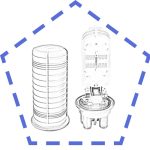 Fiber Splice Closures
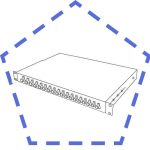 Fiber Patch Panels
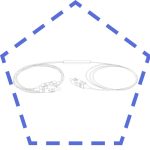 PLC FIber Optic Splitters
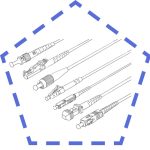 Fiber Optic Pigtails
 OTDR Launch Cables
 Fiber Optic Adapters
 Fiber Optic Patch Cables