
Tag Archives: data transmission

Fiber Optic Repeaters and Optical Amplifiers: How They Prevent Signal Loss
Fiber optic cables need repeaters to combat signal loss, ensuring data travels long distances without weakening or errors in high-speed networks.

Fiber Optic Wavelengths Explained: 1310nm vs 1550nm
Fiber wavelengths at 1310nm and 1550nm minimize signal loss and dispersion, enabling efficient long-distance data transmission in optical networks.

How Does Light Travel Through Fiber Optic Cables?
Light propagation in fiber optic cables uses total internal reflection, guiding light signals through the core for fast, low-loss data transmission.

Fiber Optic Bandwidth: How Many Movies Can It Transmit Per Second?
Fiber bandwidth enables fiber optic cables to transmit hundreds of 4K movies per second, thanks to speeds reaching hundreds of terabits.

The Evolution of Communication: From Smoke Signals to Fiber Optics
Communication history spans from smoke signals to fiber optics, showing how advances in speed, security, and global connectivity shape our world.

Why Are Fiber Optic Cables Strong Despite Being Made of Glass?
Fiber optic material uses pure silica and flawless glass, giving cables exceptional strength, flexibility, and durability for reliable data transmission.

What Is Fiber Optic Technology? How It Works & Applications
Fiber optics uses light to transmit data at high speeds over long distances, offering reliable, secure connections for internet, medical, and industrial use.
Fiber Optic Cable in 5G Networks: Applications and Deployment
Explore how fiber optic cable supports 5G networks through fronthaul, midhaul, backhaul, small cell connections, and high-capacity fiber deployment.
How Hollow-Core Optical Fiber Reduces Signal Noise
Hollow-core optical fiber guides light primarily through air rather than solid glass, helping reduce certain sources of signal noise and nonlinear effects. Explore how this technology works, its advantages, and potential applications in optical communication networks.
What is Fiber Optic Patch Cord?Types and Applications
The post "What is Fiber Optic Patch Cord?" delves into the essential features and benefits of fiber optic patch cords. These cables, crafted from high-quality optical fibers, serve as critical links in telecommunications and network infrastructures, ensuring seamless data transmission with minimal signal loss and interference. The post highlights their key advantages, such as high bandwidth capacity, speed, and reliability, compared to traditional cables. Additionally, their flexibility, durability, and ease of installation make them a distinctive choice for a range of applications, from data centers to residential networks. Fiber optic patch cords are presented as indispensable components for optimizing network performance and infrastructure efficiency.
Key Technical Specifications of Fiber Optic Splitters
Fiber optic splitter specifications are essential for evaluating optical performance in FTTH and PON networks. Learn about key parameters, including insertion loss, splitting ratio, uniformity, polarization dependent loss (PDL), return loss, and directivity.
Fiber Optical Module Trency In 5G Era
The development of 5G networks is driving demand for high-speed optical modules with greater bandwidth, lower latency, and improved energy efficiency. Explore key trends in optical transceiver technology, including higher data rates, compact designs, and applications in 5G fronthaul,
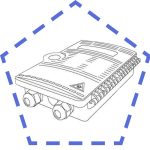 Fiber Distribution & Termination Boxes
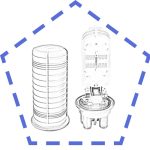 Fiber Splice Closures
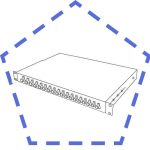 Fiber Patch Panels
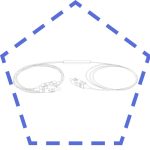 PLC FIber Optic Splitters
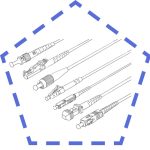 Fiber Optic Pigtails
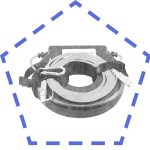 OTDR Launch Cables
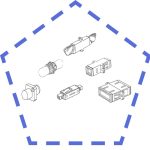 Fiber Optic Adapters
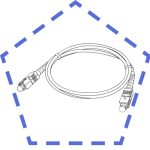 Fiber Optic Patch Cables